


Voice is Nothing But an App
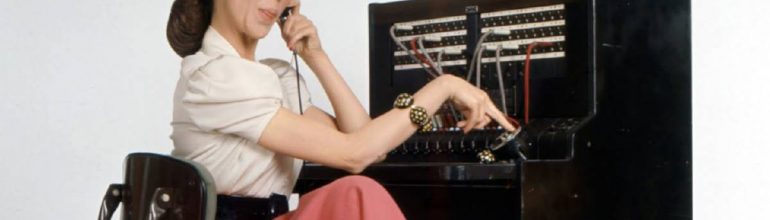
Today I filed comments with the FCC on phasing out the old-timey copper telephone network. POTS was once a valued friend and collaborator, but today it’s become the drunken uncle who disrupts Thanksgiving dinner with off-the-wall rants.
The Commission is being urged to cautiously transpose the entire Title II regulatory framework developed for telephone service from one type of network to another. This isn’t going to work because POTS is an application that is also a network while the Internet is a network for a variety of services.
It’s also a waste of time and effort to preserve technologies that have outlived their sell-by dates. Today’s phone calls don’t take place over the operator-assisted party lines that I first used to make calls in the 1950s.
Voice is an App
Today telephony is apps that move digital packets around the world. Ernestine has retired and she’s been replaced by Vonage, Signal, WhatsApp, Skype, Teams, Zoom, Facebook, Telegram, Discord, Viber, Marco Polo, Facetime, et al.
Cable companies carry more calls over wires than telcos do and mobile beats them all. The trouble is that the federal, state, and even international apparatus created for the Old World is reluctant to face the fact of its obsolescence.
Hence, I propose for Congress to step in and repeal Title II of the Communications Act and for the FCC to classify apps under Title I, Information Services. While Congress lumbers along to that conclusion, the FCC can pave the way by forbearing from all of the Title II provisions from which it can forebear.
This is a Tough Ask
Of course, the subordinate regulators and some of the interest groups don’t like this idea at all; “too radical!” they say. For example, the Maine Public Utilities Commission wants to regulate VoIP under Title II:
These comments reflect broad agreement that the transition to IP-based networks must be deliberate,
grounded in law, and structured to preserve the core principles of universal connectivity and
cooperative federalism embedded in the Communications Act…The legal foundation for IP interconnection reform must be clear and durable. Maine PUC Staff strongly support formal classification of interconnected VoIP as a Title II telecommunications service.
OK, they want to preserve their authority over VoIP, however they define it. But what about all the other voice and video apps that we all use today? No comment.
King Canute Couldn’t Hold Back the Tide
I concluded my comments with an observation about the great King Canute who ruled England, Denmark, and Norway in the 11th century, forming the North Sea Empire. He is known for the apocryphal story of ordering the tide to cease, demonstrating to courtiers that the mightiest monarch had to bow before the higher power.
For regulators, the higher power is the relentless march of technology. Title II regulates a service that is also a network, hence it deals with network issues such as interconnection and quality.
But VoIP is only a service running over a network that was designed for more general purposes. The Internet knows how to do lookups, routing, interconnection, security, authentication, and billing without the assistance of public utility commissions.
Regulatory Arrogance
The Internet is going to keep chugging along regardless of the wishes of utility regulators, with no allegiance to any one application. Like a good parent, it loves all its children the same.
The Internet has devised its own system of internal and external regulation through bodies such as standards setters 3GPP, IEEE 802, and IETF and by the inherent discipline of a competitive market. We have choices for Internet service, which is something that can’t be said about (most) electricity, water, and sanitation.
Tilting the scales in favor of voice apps over all other apps distorts the Internet, the very outcome that the net neutrality movement sought to prevent. It’s shocking that the very people who once advocated for equal treatment for all applications now want to favor one at the expense of the others.
This fight is far from over, so stay tuned. My comments are here.